


VIVA EL MATAPANKI.
It is not often that a film enthralls me from start to finish the way that Matapanki did. In its Canadian premiere at Fantasia 2026, Diego “Mapache” Fuentes creates a surreal, black-and-white punk alternate reality where drinking gives you superpowers — enough power to start a revolution and defeat an authoritarian regime. In a mere 72 minutes, Fuentes covers capitalism, punk culture, surveillance, fascism, the imperialism of the United States to Chile, police brutality, and then some.
Set in Chile, the film follows Ricardo (Ramon Galvez), a young punk who likes to smoke weed, party with his best friends Mella (Diego Bravo) and Claudia (Antonia Mccarthy), and spend time with his abuela. At a punk sesh one night, Ricardo steps away to pee, and he finds a lone empty bottle of murky liquid, which he thinks is liquor but is actually called Matapanki. The rave is interrupted by a gunshot, and Ricardo hides from fear, drinking a sip of the Matapanki. This is the first sequence where it happens — Fuentes uses animated scribbles in vibrant colors on screen whilst Ricardo drinks. The juxtaposition between the black-and-white graininess and these bright, expressive scribbles makes this scene (and subsequent scenes) feel so tactile. As he sips, yellow, purple, and red scribbles surround him. It’s like watching a live canvas. Ricardo doesn’t know it yet, but he has unlocked his superpowers, and nothing will ever be the same.
Fuentes’s mixed-media approach — plus Ricardo’s leather jacket with a web on it — is reminiscent of none other than your friendly neighborhood Spider-Man. Ricardo’s grandmother (his Aunt May) even delivers a version of the iconic quote, “With great power comes great responsibility.” Matanpanki feels inspired by Spider-Man: Across the Spider-Verse (2023), especially by the comic-book nature of the emoting. Fuentes’s characterization of Ricardo as a punk, anti-fascist, anti-cop, and anti-capitalistic version of a superhero is an act of rebellion – not only in the film, as he becomes the head of the movement, but also a revolt against the United States.
Ricardo’s eventual showdown with the President of the U.S. is an amalgamation of revolutionary ideas and actions against a fascist, imperialist regime. Fuentes is not being subtle; this is a scathing critique of the United States’ century-long interference in Chilean affairs, from government agencies controlling election outcomes to economic manipulation and more. Notably, the United States played an active role in the coup of Marxist president Salvador Allende (who is name-dropped in the film), and paved the way for the right-wing authoritarian rule of Gen. Augusto Pinochet.
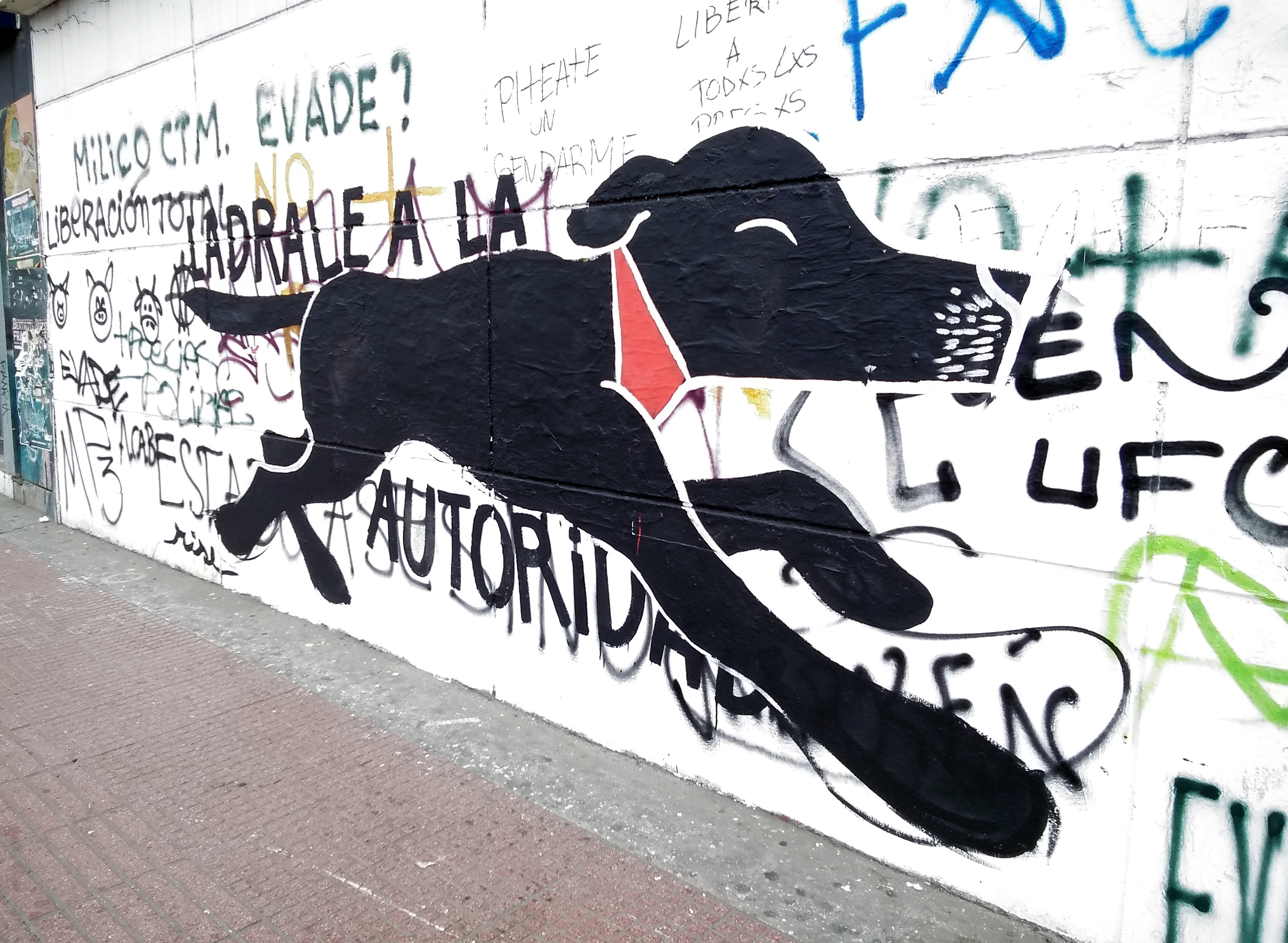
The word “Matapanki” could also stem from “Negro Matapacos” (Black cop-killer), the infamous black riot dog that partook in Chilean student protests from 2011 to 2013. The dog has become, and continues to be, a symbol of rebellion in iconography, just as Ricardo is immortalized through graffiti and memorials orchestrated by his comrades.
Galvez brings an outstanding performance as The Matapanki, not just in physicality, but in the sheer expressiveness of his eyes. He is the hero of the rebellion through and through. Bravo and Mccarthy bring such palpable vulnerability to this as well. And Rosa Peñaloza as Ricardo’s abuela made me sentimental.
Matapanki is not only a response, but also a radical call to action. In this grungy, graffitied, and surrealistic world, there are very real issues amongst the chaos. Ricardo and his friends go to raves where their cover is leftist literature. Their party place is bombed by unknown sources; police everywhere are corrupt and watching their movement; dancing is illegal; the list goes on. If you go against the authorities, you get murdered or kidnapped or worse. It is all notes of a tune that’s all too familiar to our world.
For a debut, this film is as unafraid and brazen as its filmmaker, and for that, everyone should watch it immediately. Matapanki is a heady reminder to activists all over, to those who think their fight can never prevail. To that, Fuentes would say to drink some matapanki.
Matapanki premiered on July 24.
Review courtesy of Mariana Fabian
Feature Image Credit to TK

Mariana Fabian
Mari's love of film started when she first saw Steven Spielberg's Jurassic Park (1991) as a young dinosaur fanatic. She went on to study Film at NC State University, which solidified her long-lasting passion for talking about movies and watching…
View full profile